Batch cooking has a bad reputation. People picture you on a Sunday afternoon, cooking 12 individual dishes, sweating for 3 hours, then opening the fridge on Monday to find a tide of identical plastic boxes. You eat your Monday lunch, but by Tuesday evening the thought of opening a 9th box turns your stomach.
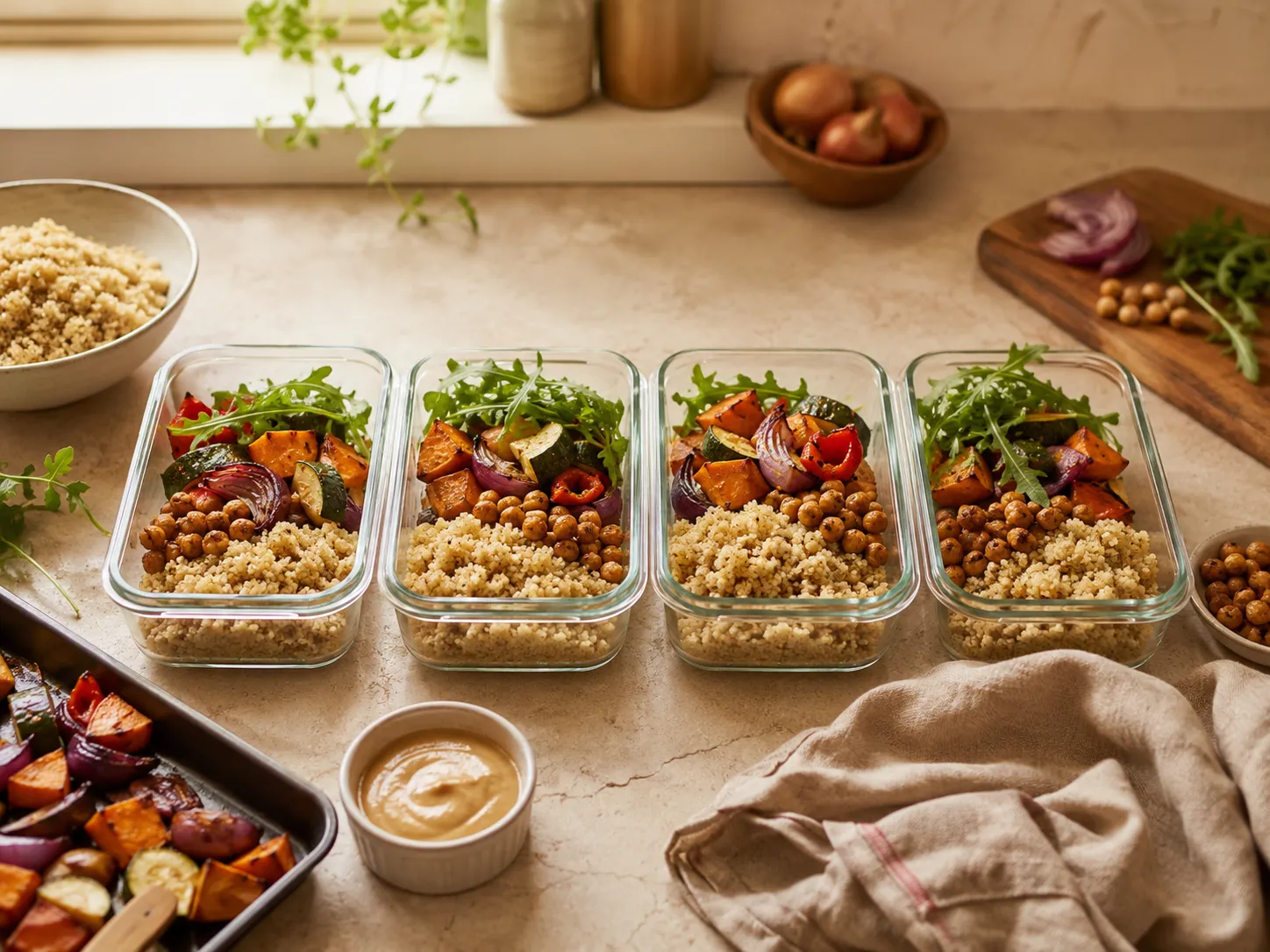
The method that works is different. You prepare 4 modular batches, not finished dishes. Those batches recombine all week long, without repetition.
The 4 batches
1. A neutral grain (15 min)
Quinoa, brown basmati rice, buckwheat, bulgur. 600 g cooked. Serves as the base for 3 to 4 meals across the week: a lunch bowl, a cold salad, a warm dinner side.
2. An already-cooked protein (25 min)
Shredded chicken, poached salmon, hard-boiled eggs, or roasted chickpeas. 500 to 600 g. You add it depending on the meal: on the bowl, into the salad, as a dinner topping.
3. Roasted vegetables (35 min, in parallel)
Carrots, broccoli, squash, red onions, beetroot depending on the season. 800 g to 1 kg. Roast them in the oven while you prep the rest. They keep for 5 days and can be eaten cold or reheated.
4. A homemade sauce or condiment (10 min)
Tahini-lemon sauce, miso vinaigrette, basil-almond pesto, or salsa verde. 150 to 200 g. This is what turns your batches into 3 different dishes. Without it, the week gets monotonous fast.
How it recombines through the week
- Monday lunch: bowl with grain + protein + vegetables + sauce
- Tuesday dinner: a wrap with the protein, leftover vegetables, sauce on the side
- Wednesday lunch: a cold salad with grain + vegetables + a hard-boiled egg added at the last minute
- Thursday dinner: a quick soup with the vegetables + the last portion of protein as a topping
- Friday lunch: a free composed plate based on whatever is left
No two meals alike. No plastic box reheated 4 days in a row.
What it actually changes
Over 3 months of batch cooking like this, I saved on average 1 hr 30 per week on planning plus cooking. That is less than the IFOP average (2 hr 12), because I did not plan everything, but it still adds up to around 70 hours over the year. The time it takes to learn a language to an A2 level.
How Budday makes it even simpler
When you declare your batch cooking preferences, the app composes your week’s menu knowing that your 4 batches are ready on Sunday night. The recipes it suggests from Monday to Friday all build on your batches. No dash to the shop at 7 p.m. to buy a missing ingredient. The grocery list includes the batches plus the 2 or 3 fresh ingredients that go with them.
If you cave and eat out one evening, the app recomposes so your batches are not wasted: they stay in use over the following days.