At 25, my fasting blood glucose was 1.8 g/L. HbA1c at 9.2%. My doctor looked at me and said: “If you do nothing in the next 3 months, we will be talking about insulin.” I had the textbook profile: sedentary for ten years, industrial food, social drinking, no sport.
Five months later, my HbA1c was at 5.8%. Fasting glucose at 0.98 g/L. I am neither a doctor nor a nutritionist, this article is not medical advice. But I can tell you exactly what I changed, hoping it helps someone who is starting out.
What science says (in 3 sentences)
Type 2 diabetes is your body no longer responding correctly to insulin. Blood glucose stays high, gradually attacks nerves, kidneys, eyes. Three main levers to bring it down: the glycemic index of what you eat, fiber and protein that slow sugar absorption, and physical activity that improves insulin sensitivity.
About 4 million people in France live with diabetes, 92% of them type 2. (Source · Santé publique France 2024)
Foods OK vs to limit
The rule that helped me: there is no “forbidden” food for T2 diabetes. There are foods to favour, and foods to limit or pair correctly. The right reflex: protein + fiber + low glycemic index, at every meal.
| Category | OK / To favour | To limit |
|---|---|---|
| Carbs | Legumes, quinoa, buckwheat, sweet potato, whole basmati rice | White bread, boiled potatoes, white rice, pastries |
| Protein | Oily fish (salmon, mackerel), eggs, poultry, tofu, legumes | Cured meats, fatty red meats (limit, don’t ban) |
| Fats | Olive oil, avocado, nuts, seeds (flax, chia) | Palm oil, fried food, excess butter |
| Drinks | Water, green tea, coffee (no sugar), herbal teas | Sodas, industrial fruit juices, excess alcohol |
| Snacks | Dried fruit (almonds, nuts), plain yogurt, whole fruit | Cookies, industrial chocolate, “energy” bars |
The 3 principles that changed everything for me
1. The 3-part plate
At every meal: half the plate vegetables (cooked or raw), one quarter protein, one quarter complex carbohydrate. This simple rule reduced my post-meal glucose spikes by 30 to 40%.
2. Eat protein first
Start with protein and vegetables, finish with carbs. Slows sugar absorption and limits the glycemic spike. Validated by multiple studies (Cornell 2015, Tokyo 2020).
3. Walk 10 minutes after each meal
A 10-minute walk after lunch and dinner significantly reduces post-prandial glucose. No need for the gym. Just walk.
“The best thing you can do for your T2 diabetes is whatever you do most consistently. Consistency beats perfection.” My endocrinologist, after 4 months.
A typical day, as I eat now
07:00. Fasted weigh-in, then breakfast. Plain yogurt + oats + almonds + red berries. Black coffee.
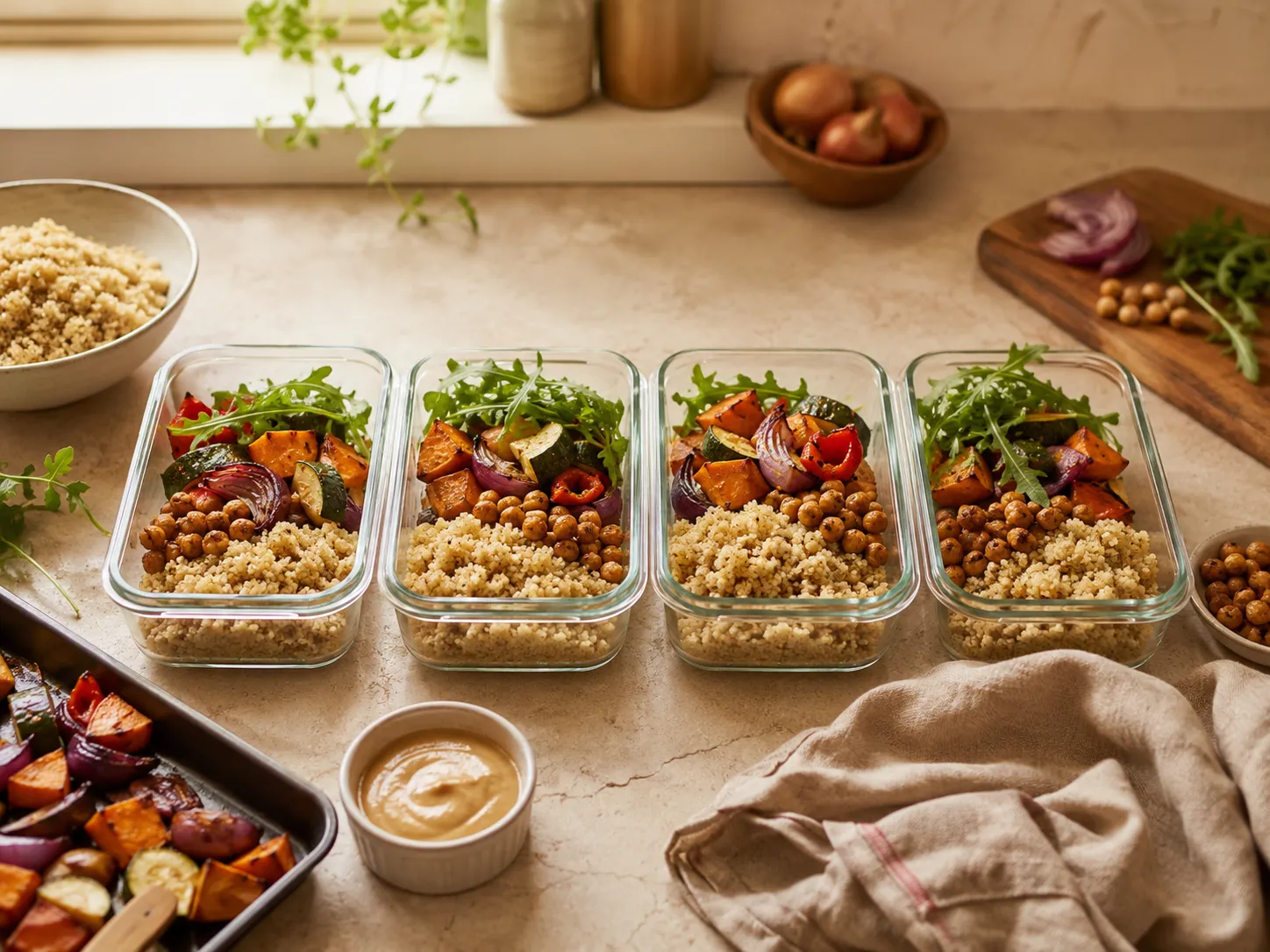
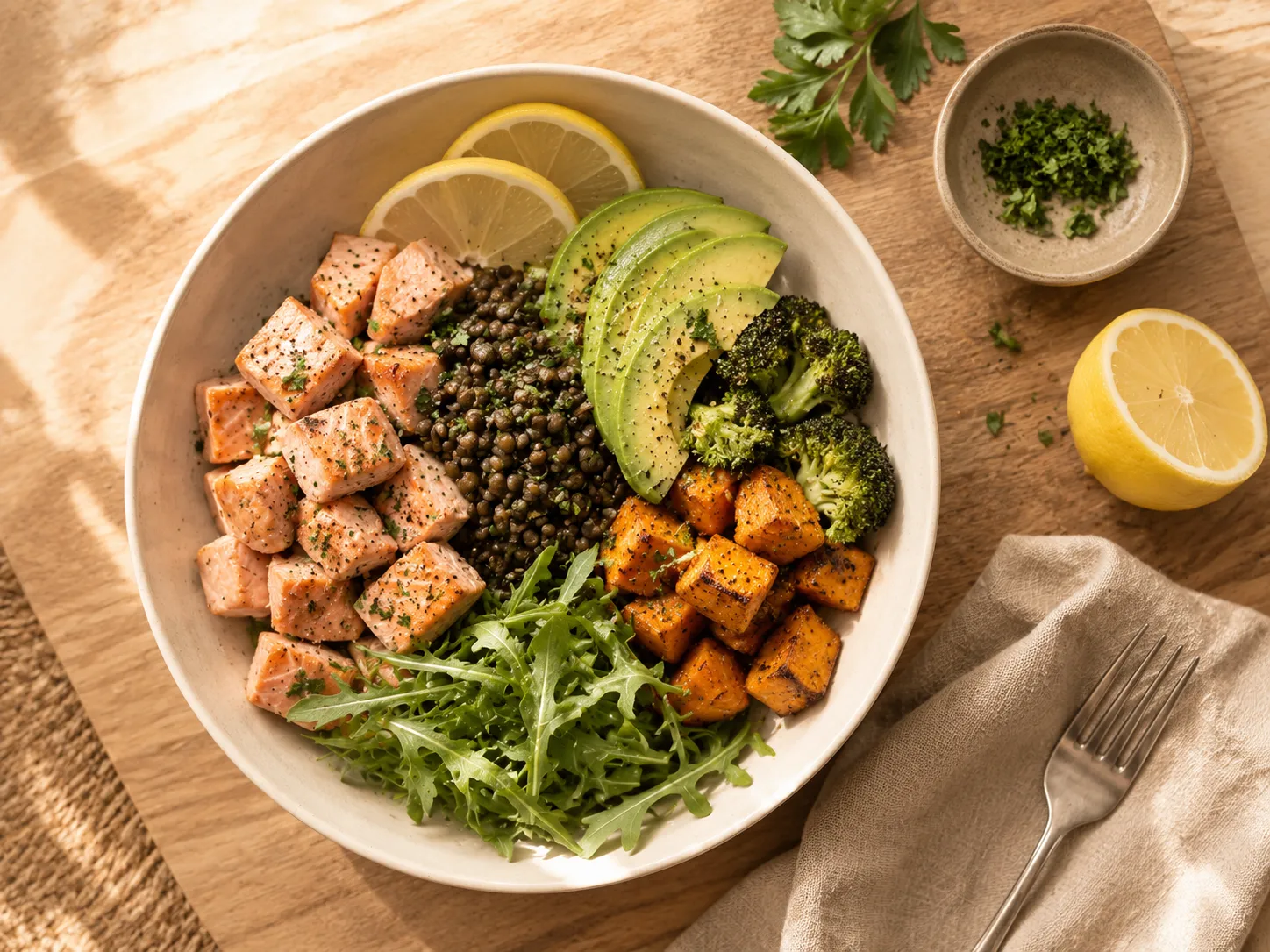
12:30. Lunch at the office. Bowl: quinoa, salmon, steamed broccoli, avocado, tahini-lemon sauce. Prepared the night before in batch mode.
16:00. Snack if needed. A handful of cashews, or a whole fruit (apple, kiwi).
19:30. Dinner. Red lentils in coconut milk, seasonal roasted vegetables. A square of 70% dark chocolate for dessert if you want.
How Budday composes all this for you
When you declare “T2 diabetes” in your profile, we automatically apply 4 filters: low glycemic index by default, calibrated protein / fiber / carb ratio, portions adjusted to your real energy needs, and on-the-fly substitutions if an ingredient does not work for you.
The weekly menu comes out ready. Groceries come sorted by aisle. The sport plan is calibrated on your level and equipment. You no longer lose 2 hours every Sunday night filtering recipes one by one.